SIGMOD Keynotes
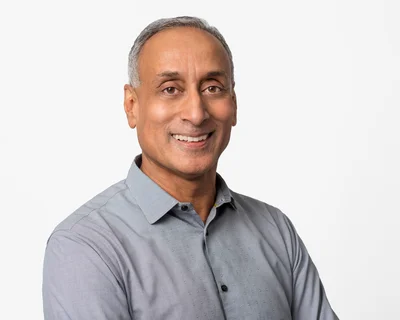
Speaker: Prabhakar Raghavan
Title: Can AI assist in Mathematics and Computer Science research?
Abstract: We share our experience using LLMs to obtain new results in mathematics and computer science. We begin with an illustrative example from load-balancing in planet-scale cloud systems, outlining the abilities and limitations of LLMs. Next, we describe our experience with AlphaEvolve, an evolutionary language model from Google DeepMind, to establish new results in the approximability of the Traveling Salesman Problem (TSP), and MAX-CUT problems. We also derive new bounds for several Ramsey numbers. Our methodology entails evolving fleets of Python programs that generate proof chunks to yield these results, and to accelerate proof verification by up to 10,000x. We suggest that our results on inapproximability and Ramsey theory could not have been discovered by hand, and conclude with reflections on the state and promise of AI in mathematics and CS research.
Bio: Prabhakar Raghavan is the Chief Technologist at Google, where he has held several senior roles since joining in 2012, including Senior Vice President with oversight of Search, Maps, Advertising, Gemini and Payments, and before that, responsibility for Gmail, Google Drive, Calendar and Google Docs. Previously, he led Yahoo! Labs and served as CTO at Verity, Inc following over a decade at IBM Research. Raghavan holds a PhD from UC Berkeley and is a member of the US as well as Indian National Academy of Engineering. He co-authored the textbooks Randomized Algorithms and Introduction to Information Retrieval. He is a Fellow of both the ACM and the IEEE, with numerous awards including a Dottore ad honorem from the University of Bologna.
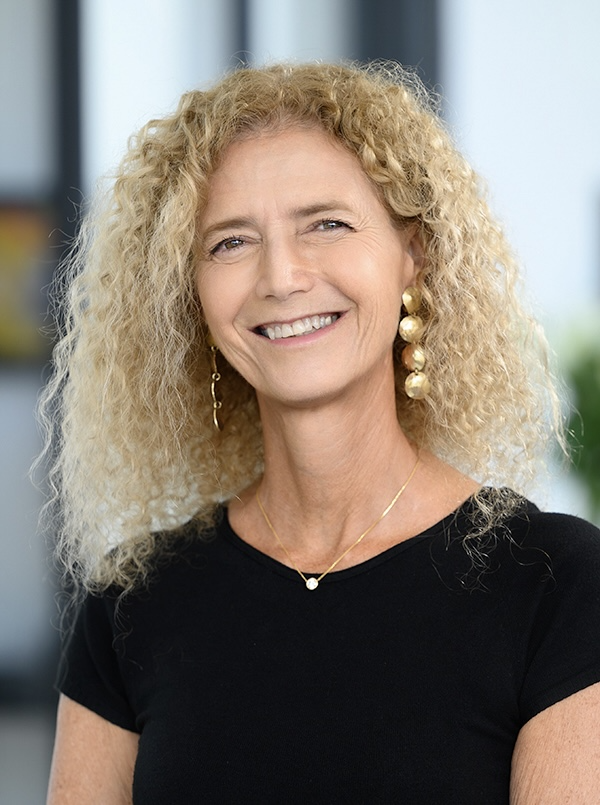
Speaker: Tova Milo
Title: Teaching a New Dog Old Tricks: Reusing Data Management Principles in the Age of LLMs
Abstract: Over the past decade, large language models (LLMs) have emerged as a powerful paradigm for interacting with data, often bypassing traditional data management pipelines. They can flexibly query, integrate, summarize, and explain data through natural language, creating the impression that many classical data management problems have been effectively solved. However, this shift comes with well-known limitations: LLMs may hallucinate facts, produce explanations that are fluent but not grounded in the data, ignore constraints and inconsistencies, and provide no guarantees on correctness, completeness, or reproducibility. These shortcomings are particularly critical in data-centric settings, where decisions rely on faithful representations of the underlying data and where subtle biases, inconsistencies, or errors can lead to misleading conclusions.
In this talk, I argue that tools and techniques developed over decades of data management research can play a central role in addressing these challenges. Our field has produced a rich toolbox for selecting informative data representations, enforcing constraints, explaining results, and validating conclusions. While originally designed for human-driven workflows, these methods provide exactly the kinds of structure, guarantees, and control that are currently missing in AI-driven data analysis.
Drawing on recent work from my group and the broader community, I will illustrate how ideas from query languages, data dependencies, explanation frameworks, and crowdsourcing can be reinterpreted as tools for guiding and constraining AI-driven analysis. I will highlight emerging opportunities for integrating these principles into modern AI systems, particularly in agent-based settings, and outline a research agenda for designing interfaces and abstractions that allow LLMs to leverage this toolbox effectively.
The key message is that the future of data management lies not in competing with AI, but in equipping it with the structure, guarantees, and discipline needed to make its outputs trustworthy.
Bio: Prof. Tova Milo is a member of Tel Aviv University's School of Computer Science, where she heads the Data Management Research Group. She serves as Dean of the Faculty of Exact Sciences and is the incumbent of the Chair of Information Management. Her research focuses on large-scale data management applications, in both their theoretical and practical aspects. Her scientific leadership has been recognized by prestigious awards, including the Weizmann Prize for Exact Sciences, the VLDB Women in Database Research Award, the IEEE TCDE Impact Award and Doctorate Honoris Causa by the University of Zurich. She is an Association of Computing Machinery (ACM) Fellow, a member of Academia Europaea, and the founder of ExactShe, a mentorship program aimed to redress the underrepresentation of women in the exact sciences. Prof. Milo has served as the Program Chair of multiple international conferences and as the chair of their Executive Committees and has received many prestigious grants including an ERC Advanced Grant and an ISF Breakthrough Research Grant.
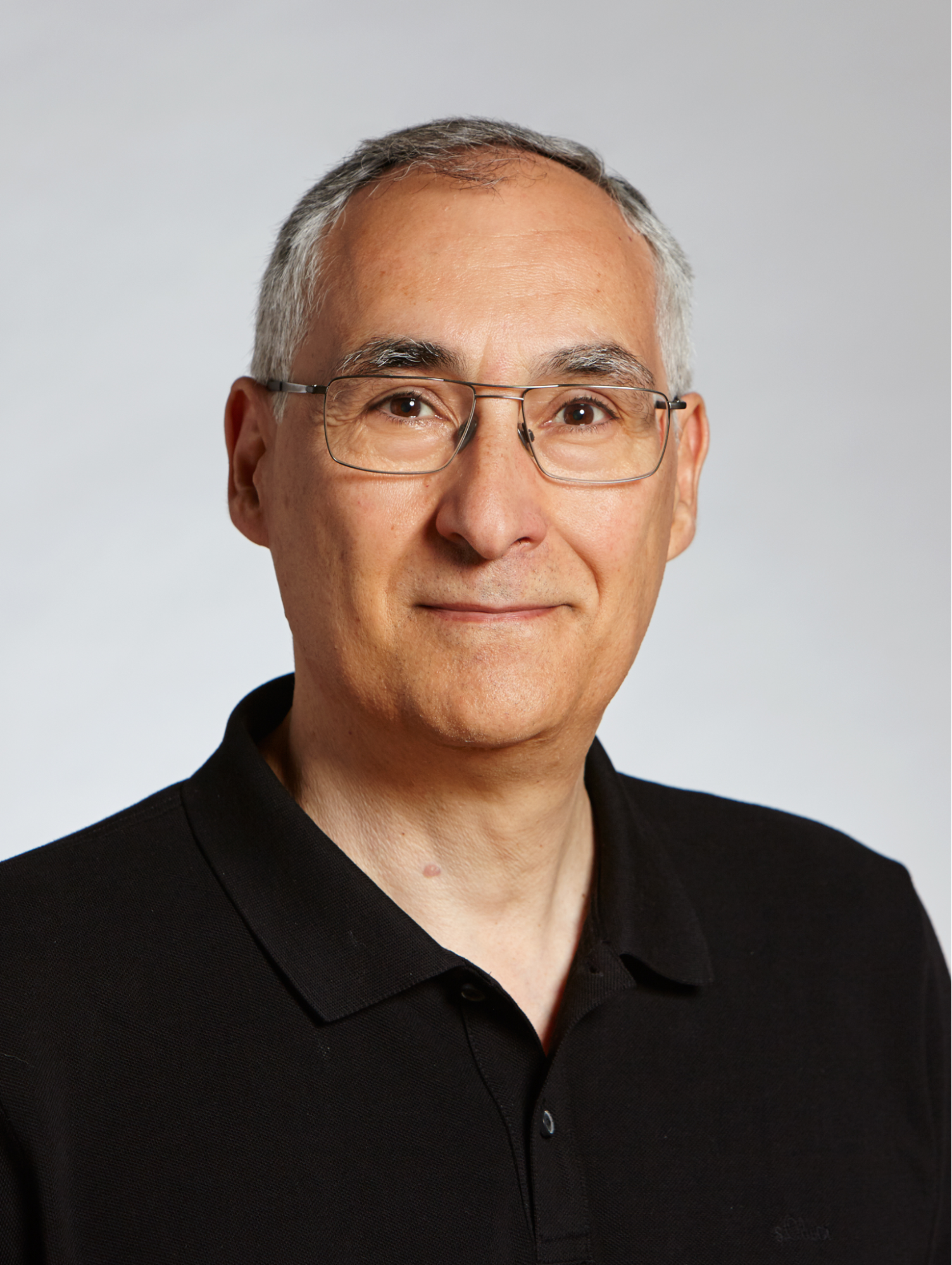
Speaker: Gustavo Alonso
Title: A New Golden Era for Data Management
Abstract: Data Management in general and database engines in particular are one of the commercially most successful software systems in history. They lie at the foundation of every application and service, having greatly expanded their functionality, performance, flexibility, and scalability over the decades. Often questioned in both academia and industry (e.g., the NoSQL movement), their basic architecture and principles have nevertheless stood the test of time, with OLAP and OLTP systems playing a crucial role in the IT industry. Maybe because of this success, we often forget that it took decades to get the relational model and databases engines to where they are today. And, maybe also because of exhaustion from such a long-term effort, the community feels the need to invest their efforts on other, often unrelated topics. In this talk I will argue that we are in a new Golden Era for Data Management that requires a similar long-term effort as the efficient implementation of the relational model did. Due to trends in hardware, business models, workloads, societal concerns, and application demands, it is fair to say that most data management platforms used today are architecturally obsolete. This obsolescence will only increase without a concerted effort to redesign and rethink established principles and approaches to data management. In the talk, I will discuss the trends – technological and societal- changing the way computing is done and outline directions for data management that are not getting the attention they deserve. Along the way, I will highlight ideas pursued in the which should be revisited in light of ongoing developments in the industry. These ideas and the research program they define might also help the community to find its focus again and to better distinguish fundamental data management research from peripheral topics.
Bio: Gustavo Alonso is a professor in the Department of Computer Science at ETH Zurich, where he is a member of the Systems Group and the head of the Institute of Computing Platforms. He leads the AMD-ETHZ HACC (Heterogeneous Accelerated Compute Cluster) deployment at ETH (https://github.com/fpgasystems/hacc), with several hundred users worldwide, a research facility that supports exploring data center hardware-software co-design. His research interests include data management, cloud computing architecture, hardware acceleration for data science, and building systems on modern hardware. Gustavo holds degrees in telecommunication from the Madrid Technical University and an MS and PhD in Computer Science from UC Santa Barbara. Before joining ETH, he was a research scientist at IBM Almaden in San Jose, California. His research has led to four Test-of-Time Awards in databases, software runtimes, middleware, and mobile computing. Gustavo is an ACM Fellow, an IEEE Fellow, a Distinguished Alumnus of the Department of Computer Science of UC Santa Barbara, and a recipient of the Lifetime Achievement Award from the European Chapter of ACM SIGOPS (EuroSys).